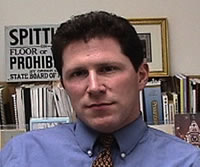
Brett Mandel of Philadelphia Forward
The proper function of government has to start with respect for citizens, but what else should we demand? Philadelphia Forward has authored a comprehensive Citizen/City Hall Compact which lists guidelines for creating a city government with greater transparency, efficiency, accountability and responsiveness. It states that citizens should always be engaged in policy processes, so we are developing a vision for our future together, as a whole city. Originally formed to support tax reform, Philadelphia Forward quickly realized that changing the tax structure would mean changing the budget, and that no change was going to be possible without an informed public. So they set out to educate Philadelphians and spread the view that a better city government is possible. I spoke to Executive Director Brett Mandel about his organization’s mission.
Can you describe Philadelphia Forward. How long have you been at it?
Philadelphia Forward is a citizen’s organization formed to build a diverse constituency for change, to promote the policies that will make Philadelphia a preferred place to live, work and visit. We are a little more than 2 years old. We grew directly out of my experience on the city’s Tax Reform Commission. Myself and a number of other citizen volunteers on the Commission had worked for about a year’s worth of time, spent a half million dollars of public money, at the direction of the public. We were actually voted on; there was a charter change that created the Tax Reform Commission. And on the Commission we were charged with making the city’s tax structure more fair and less burdensome, and we did just that. We released a wonderful 500-page report that was widely hailed as the blueprint for tax reform.
But we also recognized that it wasn’t going to be implemented just because it was a good idea. We would have to push for it. So, when the Eagles want lots of public money for a new stadium, they hire a fat-cat lobbyist, and they make alliances with the building trades, and flood City Council with people screaming, “we want a new stadium”. And when the plumbers don’t want to put flushless urinals in the Comcast building, they don’t write a report about it. No. They lobby, and they push, and they agitate. Well, we recognized if the policy is important in Philadelphia, we would need someone pushing for the policy, someone full-time, building a constituency, saying, if you believe this, write your Councilperson, or the Mayor, or write a letter to the editor.
If we’re going to look at the city’s tax structure, ultimately, we’re going to end up fighting about the budget, so people need to understand more about the budget, and how it works, and how you can be involved in the budget. And if we’re going to talk about the budget, we have to talk about the ethical framework in which we make budgetary decisions. So we have to talk about who’s taking money from whom, and what the law allows people to do, and how is this working for the folks or not working for the folks.
So we formed Philadelphia Forward, and we have been building coalitions and networks to support the reforms that we’ve been pushing: ethics reform, budget reform, and tax reform. And we have set up what we call a Reformer’s Roundtable of organizations and individuals across the city who want to make change. And we have created what we call our Citizen/City Hall Compact of policy prescriptions that would help Philadelphia make better decisions as a whole, so not necessarily decisions that would, say, give more money to the parks, or give more money to the schools, or let’s fight crime–
More like policy and process oriented.
Right. How voters can be involved. How constituents can be involved. Right now City Council loves to hold hearings in City Hall during work hours. They love to show up late for these hearings. By the time most citizens get there, and the Councilpeople finish hearing from the government witnesses, it’s two, three, four hours after the hearings were supposed to be held, and most members of the public don’t get a chance to express their voice. Well, for important matters, for the budget, for things that effect people directly, we should have hearings out in the community. They should be structured so people out in the community get a chance to speak.
Tax reform was always funny because I would hear from Councilpeople who supported my stand, who would say things like, Brett, you have to flood the chamber with small business owners so people see that small business owners care. I’d say, well, your hearing is at 10AM on Thursday. You know what small business owners are doing at 10AM on Thursday? They’re running their businesses. That kind of out-of-touchness, if that’s a word, is pervasive in our government.
We don’t create a budget in a way that people can understand the budget. We don’t publish information that the public needs. We don’t make links available for the public to get in touch with their government. Other cities have done a better job with this. Other cities, for example, have a 311 system where you can call a central number and report a pothole, or report a problem. Not only is your call answered and responded to, politely, but you get a receipt that says what your case number is, and you can call back and follow up. Anybody who’s ever dealt with the City of Philadelphia government knows you call up and say there’s a problem, maybe someone takes that information. Two weeks later, you call to follow up, and you get, I don’t know who you were talking to before, it wasn’t me. You’re going to have to start from scratch with me.
I’ve heard this from a number of people, that if there’s some kind of tax problem, they go downtown and take care of the whole thing, they think, only to have the same problem the next year. Because nothing ever gets fixed.
Well, if you want to be Machiavellian about it, you would say the system works perfectly because that encourages people then to go to their Councilperson, go to their Ward Leader, go to their Committee person. Here’s a pothole, can you fix it. And when those people make the wheels of government turn, then you are supposed to be so grateful.
And you’re beholden to them.
Right. Oh, thank you so much for making government do exactly what it’s supposed to do. Well you shouldn’t have to call someone in City Hall that’s a friend of a friend to get your street plowed. And you shouldn’t have to call your ward leader to make sure there’s a pothole filled. Or to make sure your trash gets picked up. This is what government is supposed to do; this is why we are citizens. We agree to pay taxes and vote and do all the things citizens do, abide by all our laws and regulations, and in exchange the government is supposed to serve us.
And represent us.
Yes.
Mandel picks up a Metro newspaper. Did you see this? We now have a weekly column in the Metro dealing with reform issues. Our Reformer’s Roundtable. The one from last week was about gambling-related zoning. Next week the question’s going to be about ethics reform and the Ethics Board. You may know that in the Spring the people voted to create an Ethics Board, but the Mayor has been refusing to appoint members to it.
I suppose what really is going on, like anything that happens in Philadelphia, all the different groups and special interests are pushing for their appointee. Well that’s not good for the system because now the Ethics Board isn’t doing its work, because the Mayor is playing games behind closed doors. More important, for this Board of Ethics, you don’t want it to be the same old cronies attached to the same old factions who will make their cozy deals. You want independent folks who will speak with some imprimatur that says, we are ethical and committed to the virtues espoused by the ordinances. (Despite being approved by voters, Mayor Street drew out the Ethics Board nomination process five weeks past the deadline. Just last week, a few days after this interview was conducted, he announced his nominees to the Board.)
Have you heard about GreenPlan Philadelphia? It’s a citywide, comprehensive open spaces plan. And then just last week the Mayor announced that PennPraxis will undertake a plan of the waterfront.
I hadn’t heard of GreenPlan.
See, to me that’s what’s so dysfunctional about this city. No one knows what anyone else is doing, and it’s sad because there are lots of people doing similar things.
One of the things that this administration, and government does in general, which is great for them, bad for the folks, is play one interest against the other. You’ll have your plan, meanwhile somebody over here will have his plan. These groups start out as outsiders pushing for reform. What ends up happening is government eventually invites them to the table, and they start working out a deal. And the next thing you know, they’re stuck defending a plan that doesn’t really make sense anymore.
Outsiders are supposed to put pressure on government to do the ideal, and to do what is good. People say government is supposed to be about making compromises. But here’s a horrible illustration about compromise: What if I say, I love to beat my children. (I laugh- Mandel is being sarcastic.) So that’s where we start. I beat them black and blue every night, and of course they hate it. And there are studies that say that that’s really bad for kids. And so I offer a compromise, how about if I stop beating them on the weekends? Wouldn’t that be good? It’s a start; it’s better than nothing, right? You should look at it as a victory.
I think all these things would be helped with more transparency in government. But as you pointed out, we voted for the Ethics Board, and it’s not happening. We have no power here as citizens. So I’m thinking that these plans are the kinds of things that citizens can get behind, and build some consensus.
The city doesn’t suffer because we don’t have good ideas, or that there aren’t other places we can steal good ideas from, or that we’re too stupid to figure these things out. We suffer because we choose not to implement the policies that make sense.
NTI may or may not have been a visionary policy. As a program, we spent 300 million on real mixed results. Now that’s not because there weren’t real good ideas that fueled that, it’s because we implemented them in ways that didn’t make so much sense. At the beginning of NTI, if you look at the plans, and the numbers, it made a lot of sense. We should be doing this, this and this. OK. We should leverage this, this, and this. But that’s not what we did. And one of the things that’s so damaging is that a lot of the people who are involved with making NTI what it was had lost their ability to speak out and complain about it, on behalf of what makes sense. It’s like, well, I signed off on the plan, the compromise that Brett only beats his kids five days a week, and I can’t complain because that was a victory for us.
How do you get around that?
Well, I think some of the things we’ve been talking about like the Citizen/City Hall Compact help. Because you’d like to have much more transparency, you’d like to have situations where the public knows a lot more and that the public input is structured in such a way as to be much more participatory. You’d like to change the way Council considers things. You’d like to change the way government reports to people. You’d like to change the way the whole budget process works so that the public comment doesn’t come last, it comes first.You’d like to have systems where people interact with their government instead of people having to interact with political types. So there are lots of things we should be doing. And whether it’s a new zoning code or a new comprehensive plan, these are the kinds of things government should do, should do with public input, and report back to the folks.
But again, I think the temptation for groups is to want to be on the inside, and to want to be around the table when decisions are being made. And that makes perfect sense because that’s the way our government has worked for as long as people can remember. By the time the public gets to comment, all these decisions are made. So what we have to do is work with the system. I started Philadelphia Forward sort of with the opposite framework in mind. I had been on the inside, and I had seen that, you know what? These decisions aren’t being made based on what makes sense, they’re being made by political positions–
And compromise.
Yeah. And in the end we end up with policy after policy that has been hurting the city. So what good does it do me to be sitting around the table saying here’s something that makes sense? What’s so troubling about the way the system works is that the system will always want to do less, to always ask for a compromise.
So what’s the solution?
My solution is more voice in the process, more participation in the process throughout the whole thing. The more they see that the people want X, but they don’t want Y, the more they’ll do what is right. Unfortunately, what happens in a lot of these cases is you work on what ends up being a compromise proposal, you put it forth, and then it faces more and more compromises, and at the end you walk away from the table thrilled that you got a tiny, tiny bit.
A number of years ago, there was a march on City Hall. The Mayor had proposed stopping the wage tax cuts, so there was a march on City Hall and I was happy to be one of the folks who helped bring it all together. We marched on City Hall demanding restoration of the wage tax cuts that were too small to begin with anyway, and when we got it, we celebrated. To play off of Winston Churchill’s line, never have so many been so happy with so little. That wasn’t the ideal, that wasn’t what was good. We restored what we weren’t happy with to begin with. And celebrated about it. No, we should be pushing for an ideal.
So this Compact, this is an ideal.
I hope so. The idea behind this is we wanted to create something that individuals and groups around the city can become familiar with and say, yeah, this stuff makes sense, and we will be much more likely to embrace a candidate who is on board with this, and less likely to embrace a candidate who isn’t. We want candidates, those running for mayor, or for dog-catcher, whatever, to look at this and say, you know what, there’s a lot of people who will like me if I like this stuff, so I’m for this stuff. We’d like it to be like a badge of honor, so people will stand up and say, I endorse the Citizen/City Hall Compact and I will make it a priority to do these things once elected. Well, hopefully that makes some people more electorially viable and will threaten some other people. Competition is great in the political system; it’s the only thing that keeps these people honest. So if they see this as a reason to be elected or as something to fear that might get them unelected, that’s terrific.
And it provides a terrific ‘to-do’ list if we get a reform slate of people in office.
On Wednesday, October 25th, Philadelphia Forward will host a meeting with political consultant Neil Oxman, who will give his views on how to shape up a reform effort that can make lasting changes. It will be held at Friends Select School/ 17th and Benjamin Franklin Parkway at 7:30PM. The event is free and open to the public.
On Wednesday, November 8th, also at Friends Select School, Philadelphia Forward will host a viewing of Tigre Hill’s “The Shame of a City”, which tells the story of the 2003 Philadelphia mayoral election. Political insider Carl Singley will answer questions about Philadelphia politics. The event starts at 7:30PM and is $20/person.
Find out more about Philadelphia Forward. Read the Citizen/City Hall Compact.
2006-10-22 06:04:44